I appreciate well-crafted stories, especially ones that address socially relevant topics. I want to discuss a few HBO shows that are still fresh in my memory and achieve this particularly well: The Umbrella Academy season two, Mike Flanagan's The Haunting series season two (Bly Manor), and the sequel series to the graphic novel Watchmen. These shows adapted from original sources and added topical subjects for our current era, making them thought-provoking.
The Umbrella Academy
It has a quirky vibe with a wild bunch of characters that somehow mingle and blend together to make a coherent story. The casting is near perfect—every actor (I mean every sibling) helped bring unique and likable characters to life. Family is everything, no matter how much they fear or despise their father. This setup is fantastic.
For season two, the writers infused sensitive topics when the story involved time travel—racial segregation and homosexuality in the 1960s. There's so much you can portray from dark history and dramatize for a show. I can't claim I'm an expert or historically well-versed, but I want to acknowledge that history is permanent and it often repeats itself if we don't learn from it. And our current era sadly seems headed in that direction. The resolution with a happy ending was just momentary, but it was satisfying while it lasted.
The Haunting of Bly Manor
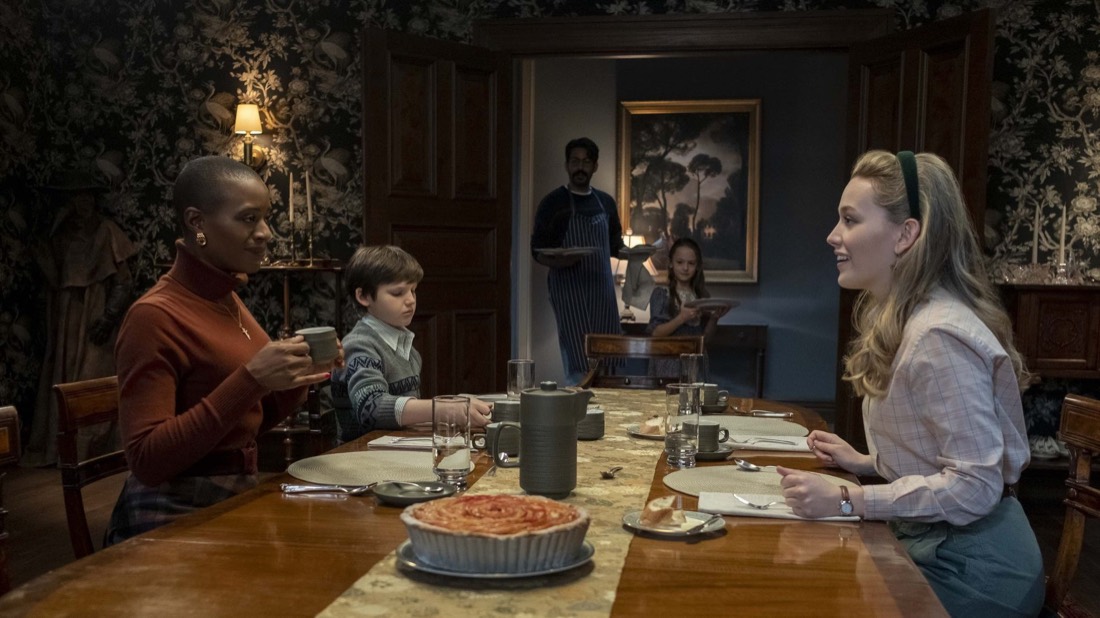
Flanagan's second season of his highly acclaimed Haunting series didn't disappoint. The first season, Hill House, gave me the kind of chill I got from watching The Jinx—which I can perhaps mention in another entry. Bly Manor is a perfect slow-burn show with an elaborate setup, and even the opening theme itself is a reminder of its haunting ambience every single time. The narration of the first episode is captivating. It's such an elaborate world and distinct from the first season. This is a showcase that Flanagan is not a one-time wonder, and why Warner Brothers made a bet on him to carry on Kubrick's legacy with The Doctor Sleep adaptation.
From the first season of his Haunting series, many people voted the Bent-Neck Lady episode as the most memorable, but I disagree. That episode is no doubt a pivotal moment that ties many clues and timelines together, but the writing and editing that built up the ambience and character depth deserve equal credit.
In one podcast interview, Flanagan discussed how many horror genre audiences don't like happy endings. It's true—scary movies often end with open endings or disturbing plot twists that emphasize nihilism. I think these formulas work only if the storytelling is complete. The first season, Hill House, on the other hand, is a beautiful human drama with a clean resolution and closure. This is respect paid to an audience that had the patience to see the end and wanted the characters they invested in to be happy. I cried like a baby at the end of the last episode as I said goodbye to the Hill siblings. It lingered for a few weeks, and I try to recapture that feeling a few times a year by rewatching it. I have a soft spot for family stories. Unconditional love is really all we need.
The second season, Bly Manor, begins with the protagonist explaining that a ghost story and a love story are all the same. This is a great opening to the time travel the show takes you on.
When Dani and Jamie opened up about their feelings for each other and their painful pasts, I was fully engaged with the beautiful dialogue, and I felt sympathy for Jamie. Everyone has traumatizing memories that last a long time. I saw myself in her articulating my own past that shaped who I am. Bly Manor is also about forbidden love through the lens of feminism—socially repressed homosexuality in the 1980s and breaking free from patriarchal expectations. Dani is constantly chased by her own past and guilt as she pursues female agency. She realized that happiness comes from her honesty, not from being accepted by others.
Watchmen
In this sequel adaptation to the innovative graphic novel, the story has modern updates that reflect a racially segregated world with entrenched elites. We're living in an information-overloaded world connected by the internet. We can instantly access a near-infinite amount of information, which becomes a double-edged sword once you realize how easily facts are tainted by misinformation. Many incidents have demonstrated that historical facts are not immune to this problem. Social media platforms have given large and powerful microphones to individuals who deny or alter the past for various reasons—there are monetary motives or propaganda for authority, or initially simple attention-seeking. The risks become serious when these lead to systemic hatred and discrimination against certain groups of people while benefiting others. Therefore, it becomes more important than ever to be able to filter the information you consume to make rational decisions.
Less than five years ago, this concern became a daily threat and unavoidable with the rise of artificial intelligence technology and machine learning. People have become exponentially more dependent on these technologies not only for work but for forming opinions. Our thoughts can be easily swayed and manipulated by this information, and one decision can trigger and determine a long chain of consequences that can either make you rich and powerful or a social outcast. This show is a stark warning about the importance of filtering information to formulate opinions and remain humane to survive.
Alan Moore wrote the original graphic novel covering the Vietnam War and post-war fears during the Nixon presidency, which oddly resembles what's happening in the United States now. This adaptation added an additional layer of racial segregation by retelling the Tulsa massacre in Oklahoma and introducing peripheral characters that are linked to the original characters in one way or another. I highly recommend reading this graphic novel to appreciate the artwork and enjoy a story that's never been more relevant to all of us now.