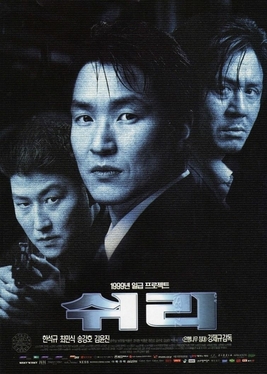
I remember watching Shiri in a theater in South Korea when I was little. Perhaps I was a bit too young for the movie, but my parents wanted to watch the most popular Korean film at the time with my sister and me. It is a vivid memory—how I was captivated during the opening scene of the North Korean army training montage. It was overly dramatic, and the soundtrack was impactful for a young boy.
When I rewatched this film recently, it was still entertaining and enjoyable. Behind the romantic thriller story, the theme of the movie covers the deeply rooted relationship between North and South Korea—spanning over seventy years of painful war and division. The topic remains relevant, and the dialogue reads well. This film has sentimental and melodramatic elements with decent character development that makes it distinctly Korean and appealing to Asian audiences. Having said that, similar to Director Kang’s previous film The Ginkgo Bed, several scenes suffer from abrupt edits.
Director Kang Je-gyu was an emerging filmmaker in Chungmuro—South Korea’s equivalent of Hollywood—when he developed the script for Shiri. This film eventually became the biggest blockbuster of that year in South Korea. It left numerous milestones in the industry—setting a historic record as the most successful South Korean-made film at that time with over six million ticket sales, far surpassing the record previously held by Sopyonje (1993), selling more tickets in South Korea than the global phenomenon Titanic, and launching stardom for many of its actors and actresses.
This film is not just important for starting the mainstream Korean cinema era. It is important for my childhood. I learned the power of film as escapism and discovered my love for film as artistry. I still dream of making a movie one day—creating memorable characters and a story that lingers. Shiri allowed me to dream about it.